
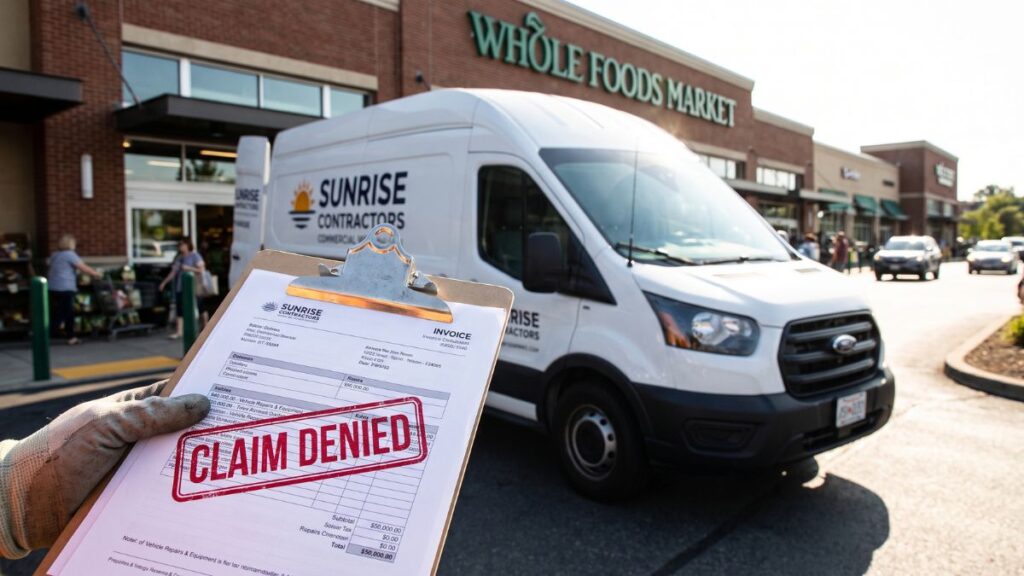
Last month, I was grabbing a quick coffee with a close friend who runs a small electrical contracting business. Out of nowhere, he dropped a bombshell that nearly ruined his business.
Two weeks earlier, he had taken his work van—fully wrapped in his company logo—to pick up some groceries on a Sunday afternoon. A distracted driver ran a red light and broadsided him. Thankfully, no one was seriously injured. But when he filed the claim with his insurance company, the adjuster didn’t ask about the damage first. Instead, they asked: “Were you on your way to a job site?”
He answered honestly: “No, just running a personal errand.”
Forty-eight hours later, he received a formal claim denial letter in his inbox. Because his commercial policy lacked a specific personal use endorsement, the insurer classified the Sunday grocery run as unpermitted usage. He was suddenly staring down a $52,000 bill for vehicle repairs, a rental unit, and property damage—all out of pocket.
This isn’t an isolated incident. Thousands of small business owners, freelancers, and independent contractors fall into this exact trap every year. They assume that having a commercial auto policy means they are covered 24/7, no matter what they are doing behind the wheel.
In reality, there are critical policy loopholes and personal driving errors that can void your commercial auto insurance in seconds. Let’s walk through the exact personal drive mistakes that trigger claim denials, how adjusters catch you, and the simple steps you can take today to protect your assets.
The Big Misconception: Commercial vs. Personal Coverage
When you buy a commercial auto policy, you pay higher premiums because commercial vehicles carry higher risks. Commercial vehicles are typically heavier, driven more miles, and often transport valuable equipment or goods.
Most business owners assume: “If I’m paying more for commercial coverage, it must cover everything my personal policy covers, plus business activities.”
That assumption is dead wrong.
Commercial auto insurance policies are legally written to cover specific operational risks related to your business. Unless your policy explicitly includes personal drive protections, the insurance company views non-business driving as an unpriced, ununderwritten risk.
When you drive a commercial vehicle for personal reasons without the right riders, you enter a legal gray zone. If an accident happens during that trip, the insurer can invoke exclusions buried in the fine print of your policy to deny coverage completely.
5 Personal Drive Errors That Instantly Void Your Commercial Coverage
Through real-world case studies and conversations with insurance adjusters, I’ve identified five common driving scenarios where business owners accidentally void their coverage.
       [ Commercial Policy Active ]
                   │
  ┌────────────────┼────────────────┐
  ▼                ▼                ▼
[Sunday Errands] [Family Trips] [Unlisted Drivers]
  │                │                │
  └────────────────┼────────────────┘
                   │
                   ▼
     ❌ CLAIM DENIED ($50k+ Risk)
Error 1: The “Quick Weekend Errand” Trap
This is the most common mistake small business owners make. You own a single work truck or van, and on Saturday morning, you drive to the local hardware store to pick up supplies for a DIY project at your home.
You aren’t working for a client. You aren’t getting paid. You are simply using your primary vehicle to run a personal errand.
If you get into a crash during this trip, the claims adjuster will investigate the primary intent of your drive. If the trip was 100% personal and your policy doesn’t have a Permissible Personal Use endorsement, the insurer can deny the claim.
Why Adjusters Deny It:
Insurance companies price commercial policies based on business operating hours and designated commercial routes. Weekend personal driving increases total mileage and introduces non-business risk factors that weren’t included in your premium calculation.
Error 2: Letting an Unlisted Household Member Drive the Vehicle
Picture this scenario: You come home after a long workday, and your teenage son or spouse needs to run to the pharmacy. Your work truck is parked in the driveway, blocking their sedan. You hand them the keys and say, “Just take my truck.”
If an unlisted family member gets into an accident while driving a commercial vehicle for personal reasons, your policy will almost certainly fail to protect you.
The Risk:
Commercial policies require every regular driver to be listed on the policy so the insurer can evaluate their Motor Vehicle Record (MVR). Allowing an unlisted driver—especially a high-risk driver like a teenager—to operate a commercially insured vehicle for personal use gives the insurance company a ironclad legal reason to deny liability coverage.
Error 3: Vacation and Long-Distance Personal Road Trips
Taking a work vehicle on a family road trip or weekend getaway to another state is a massive red flag for commercial insurers.
I once reviewed a case where an independent contractor drove his business SUV from Ohio to Florida for a vacation. During the trip, a minor collision occurred in a parking lot. When the insurance company discovered the vehicle was hundreds of miles outside its registered commercial radius for a non-business vacation, they denied the $14,000 physical damage claim immediately.
+------------------------------------------------------------------------+
|                      RED FLAG LOCATION NOTICE                          |
|                                                                        |
|  Registered Business Radius:  50 Miles (Local Operations)              |
|  Accident Location:           600 Miles Away (Florida Coast)           |
|  Drive Intent:                Family Vacation                          |
|                                                                        |
|  STATUS: CLAIM DENIED - EXCEEDS GEOGRAPHIC & USE LIMITATIONS           |
+------------------------------------------------------------------------+
Geographic and Radius Exclusions:
Most small business commercial policies include a radius limitation (e.g., 50 miles, 100 miles, or 300 miles from your principal place of business). Driving beyond this radius for personal enjoyment violates the terms of the underwriting agreement.
Error 4: Mixed-Purpose Trips Without Documented Business Intent
What happens when a drive is partially for business and partially personal?
For example: You drive 20 miles to drop off an invoice with a client, and then you travel another 5 miles to meet friends at a restaurant for dinner. On your way home from the restaurant, you get into an accident.
This “commingled use” confuses many business owners. If an accident occurs on the leg of the trip that was purely personal, insurance companies will often argue that the business portion of the drive had concluded.
How Adjusters Investigate Commingled Drives:
- Time of Accident: Was it past normal business operating hours?
- GPS Data: Modern fleet telematics show your exact route and stopping points.
- Receipts & Statements: Adjusters will request receipts or phone records to establish what you were doing right before the crash.
If the evidence proves you were engaged in a purely personal activity when the collision occurred, your commercial coverage can be switched off.
Error 5: Hauling Personal Equipment or Recreational Gear
Using a commercial truck to tow your personal boat, camper, or ATV on a day off is another shortcut to a denied claim.
Commercial auto insurance is structured to cover commercial cargo, trade tools, and business inventory. It is not designed to cover recreational gear or personal belongings.
+-------------------------------------------------------------------------+
|                  COMMERCIAL AUTO COVERAGE COMPARISON                    |
+-----------------------------------+-------------------------------------+
| COVERED (Business Intent)         | EXCLUDED (Personal Intent)          |
+-----------------------------------+-------------------------------------+
| • Work ladders & job site tools   | • Personal boats, trailers & ATVs   |
| • Client inventory & materials    | • Home furniture & personal moving  |
| • Trade-specific machinery        | • Camping gear & sports equipment   |
+-----------------------------------+-------------------------------------+
If you tow a personal boat with your commercial truck and cause an accident, the insurer may refuse to pay for damages to third-party vehicles, your truck, or the boat itself, citing unpermitted commercial vehicle operation.
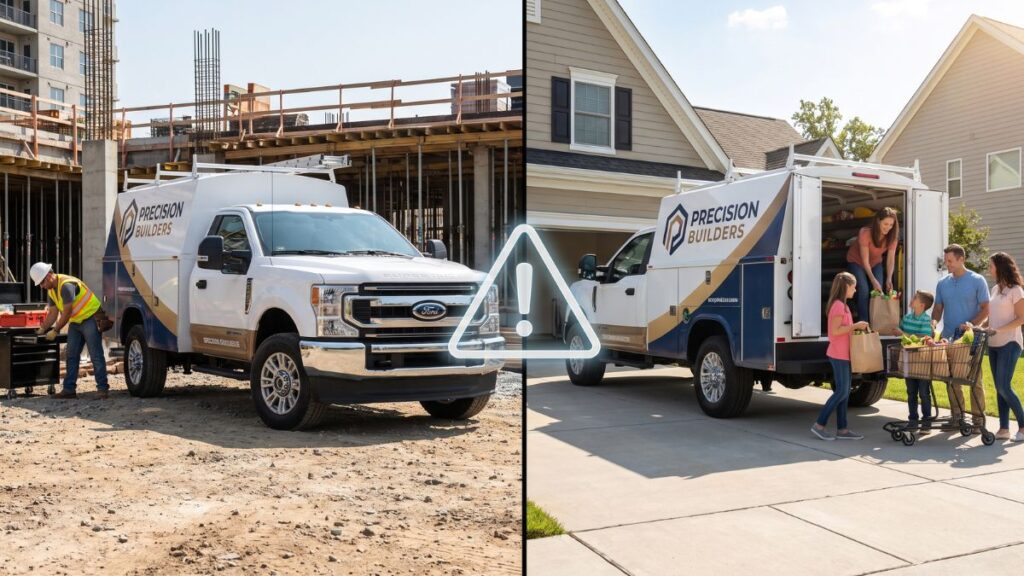
How Insurance Adjusters Catch Personal Drive Errors
In the past, business owners could easily claim every drive was business-related. Today, insurance companies use sophisticated digital tools and investigative methods to verify whether a drive was commercial or personal.
┌────────────────────────────────────────────────────────┐
│             HOW ADJUSTERS VERIFY CLAIM INTENT          │
├────────────────────────────────────────────────────────┤
│ 1. Telematics & GPS Data (Speed, route, time of day)   │
│ 2. Dashcam Footages (Interior/exterior video feeds)    │
│ 3. Social Media Monitoring (Check-ins & posts)         │
│ 4. Immediate On-Scene Statements (Police reports)      │
└────────────────────────────────────────────────────────┘
1. Vehicle Telematics and GPS Logs
Many commercial policies require plug-in telematics devices (or integrated software like Samsara, Geotab, or Progressive Snapshot Pro). These devices record:
- Time of day and day of the week
- Exact start and end locations
- Driving behavior (speeding, hard braking)
If your crash happens at 11:30 PM on a Saturday night near a bar district, your telematics data makes it almost impossible to claim you were performing electrical work.
2. Social Media and Digital Footprints
Adjusters routinely check public social media profiles following a major claim. If you post a photo on Facebook saying “Heading to the beach for the weekend!” right before an accident in your work truck, that post will be used as evidence to deny your claim.
3. Immediate On-Scene Police Reports
When police arrive at an accident scene, they ask basic questions about where you were going and where you were coming from. Your answers are documented in the official police report. If you tell the officer you were returning from a grocery store, that statement becomes part of the permanent insurance investigation record.
Step-by-Step Guide: How to Fix This Coverage Gap Today
You don’t need to sell your work truck or buy a second vehicle just to run personal errands. You simply need to structure your insurance policy correctly.
+-----------------------------------------------------------------------+
|              ACTION PLAN: FIXING YOUR COVERAGE GAPS                   |
+-----------------------------------------------------------------------+
|  [Step 1] Perform a Policy Audit                                      |
|            └─ Check declarations page for "Permissible Personal Use"  |
|                                                                       |
|  [Step 2] Contact Your Insurance Agent                                |
|            └─ Request a "Drive Other Car" (DOC) or Personal Rider     |
|                                                                       |
|  [Step 3] Update Your Listed Drivers List                             |
|            └─ Add family members who drive the vehicle regularly      |
|                                                                       |
|  [Step 4] Keep Digital/Physical Travel Logs                           |
|            └─ Separate work trips from personal mileage clearly       |
+-----------------------------------------------------------------------+
Step 1: Audit Your Declarations Page
Pull out your current commercial auto insurance declarations page (the summary document at the front of your policy). Look for terms like:
- Permissible Personal Use Endorsement
- Drive Other Car (DOC) Coverage
- Individual Named Insured Endorsement
If you do not see these endorsements listed, your policy currently offers zero protection for personal driving.
Step 2: Add a “Permissible Personal Use” Endorsement
Call your insurance broker or provider and ask to add a Permissible Personal Use Endorsement.
This rider extends your commercial liability, comprehensive, and collision coverage to include non-business driving.
- Estimated Cost: Adding this endorsement typically increases your annual premium by $100 to $300 per vehicle—a tiny price to pay compared to a $50,000 out-of-pocket claim denial.
Step 3: Add “Drive Other Car” (DOC) Coverage (For Incorporated Businesses)
If your business is structured as an LLC or Corporation and the vehicle is registered in the company name, a personal use endorsement might not be enough.
In this case, you need a Drive Other Car (DOC) Endorsement. This endorsement treats the named business owner (and their spouse) as if they had a personal auto policy when driving company-owned vehicles or renting vehicles for personal use.
Step 4: List All Potential Drivers
If your spouse, partner, or adult children ever drive your work vehicle—even once a year—make sure their names and driver’s license numbers are officially added to your policy. While this may slightly adjust your premium based on their driving record, it eliminates the “unlisted driver” exclusion trap.
Step 5: Maintain Clear Mileage Logs
Use simple mileage-tracking apps like MileIQ, Everlance, or Hurdlr. These apps run in the background on your phone and allow you to swipe right for business drives and swipe left for personal drives.
+-----------------------------------------------------------------------+
|                    SAMPLE DIGITAL MILEAGE LOG                         |
+------------+-------------+---------------------+----------+-----------+
| Date       | Start/End   | Destination / Purpose| Type     | Miles     |
+------------+-------------+---------------------+----------+-----------+
| 2026-07-20 | 08:00-09:30 | Job Site A (Client) | Business | 24.5      |
| 2026-07-21 | 14:00-14:45 | Hardware Store      | Business | 11.2      |
| 2026-07-22 | 10:00-11:15 | Grocery Run         | Personal |  8.4      |
+------------+-------------+---------------------+----------+-----------+
Having an accurate log proves to your insurer that you accurately separate business and personal usage, making it far easier to resolve claims quickly.
Real-World Example: How $150 Saved a HVAC Contractor
To see how this works in practice, consider the case of a local HVAC contractor in Texas.
He operated a small fleet of three service vans registered to his LLC. During a policy review with a knowledgeable agent, he learned that driving his primary service van home and taking it out on weekends exposed him to massive personal liability.
He spent an additional $150 per year to attach an Individual Named Insured Endorsement with Permissible Personal Use to his policy.
Six months later, while driving his service van to a Saturday evening family dinner, another vehicle collided with his van at an intersection. The total repair costs and medical claims came out to $38,500.
Because he had added the $150 endorsement, the insurance company processed the claim without hesitation, paid for the repairs, and provided a rental vehicle. Without that endorsement, his LLC would have faced immediate legal claims and potential bankruptcy.
Key Takeaways Checklist
Before you get behind the wheel of your work vehicle for your next personal errand, review this quick safety checklist:
- [ ] Check Your Policy Endorsements: Confirm you have explicit “Personal Use” or “Drive Other Car” coverage attached to your commercial policy.
- [ ] Verify Listed Drivers: Ensure anyone who operates your commercial vehicle is listed on your policy.
- [ ] Respect Geographic Limits: Know your policy’s radius limitations before taking work vehicles on long-distance trips.
- [ ] Separate Personal Gear: Avoid towing personal boats or recreational vehicles with commercially insured trucks unless approved by your carrier.
- [ ] Track Your Mileage: Use a digital app to maintain a clean record of personal versus business driving.
Final Thoughts
Running a business is already full of unexpected costs and challenges. The last thing you need is to lose your hard-earned assets because of a technical exclusion hidden deep in your insurance paperwork.
If you drive your commercial vehicle for anything other than strict business tasks, take ten minutes today to review your coverage. Call your insurance agent, ask specifically about personal drive endorsements, and close those coverage gaps before a sudden collision turns a simple Sunday errand into a $50,000 financial disaster.